
French industrial expertise · Since 1994
HYDRO
Industrial dust collector
A wet dust collector for certain sensitive or sticky dusts, mixing the dust laden air with water.
Technical data sheet available in French.
01 / The right application
Wet dust collection
The HYDRO range uses wet collection for sensitive dusts, including aluminium or magnesium, as well as certain sticky dusts. It is designed for continuous 24/7 operation, with limited maintenance and low water consumption. Suitability for the pollutant and process is confirmed through risk assessment.
Request a quote02 / How it works
HYDRO
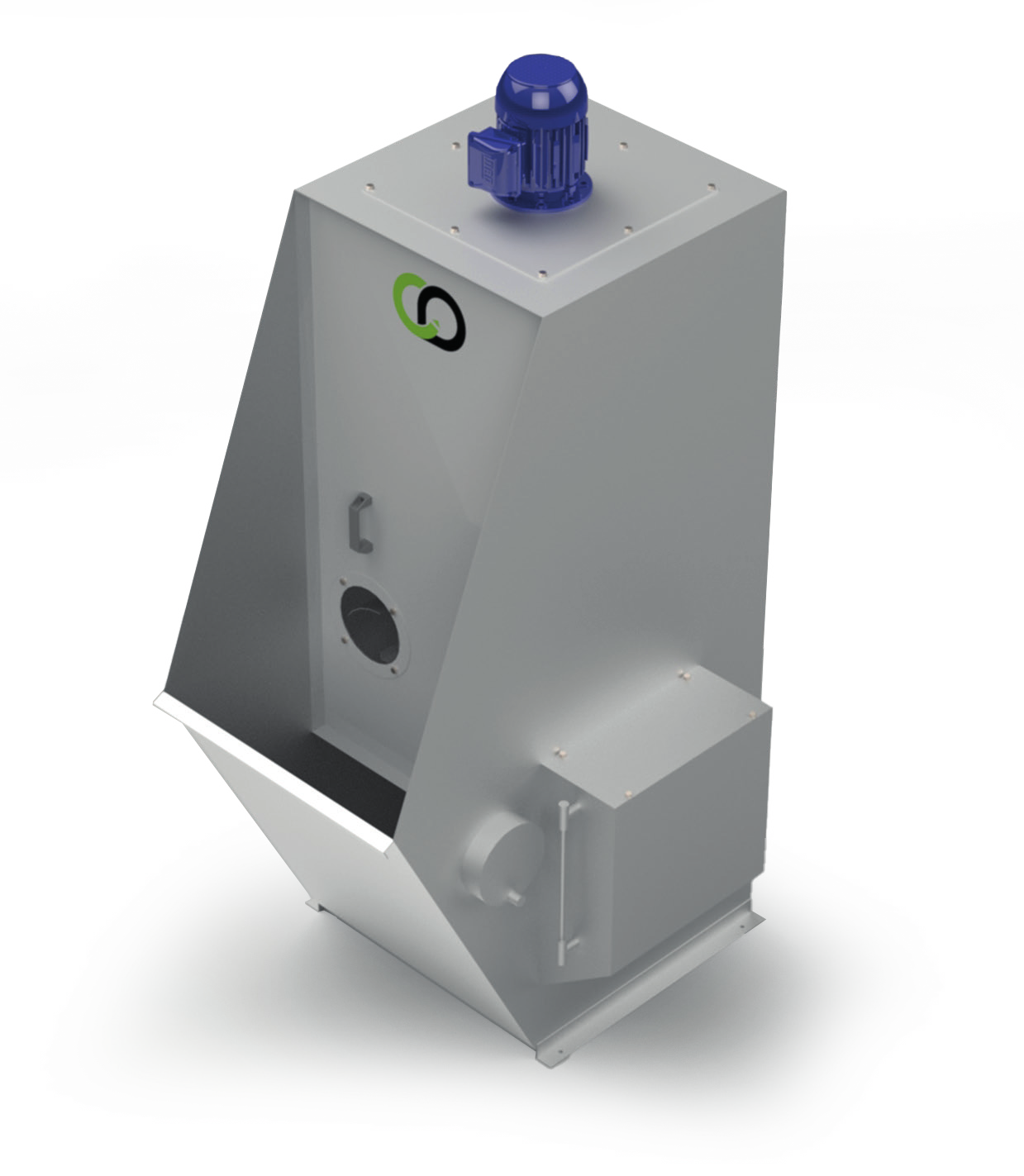
- Dust laden air is mixed with water in a swirling zone. Captured particles settle at the bottom of the tank.
- The air passes through a droplet eliminator. The water level remains visible through a sight tube.
- Sludge is brought up by scraping and the drain is located at the bottom.
03 / Technical specifications
Technical specifications
| Model | Airflow m³/h |
Pressure mm WC | Power kW | W × D × H mm |
|---|---|---|---|---|
| 150 | 600 | 90 | 0.75 | 725 × 875 × 1 825 |
| 200 | 2 000 | 150 | 2.2 | 875 × 1 105 × 2 080 |
| 250 | 3 500 | 140 | 4 | 1 095 × 1 330 × 2 560 |
| 500 | 5 000 | 150 | 7.5 | 1 240 × 1 500 × 3 160 |
Values from the technical data sheets. General range summaries may differ from individual model values; the table details the listed configurations. Final selection depends on the operating point.
2 mm electrogalvanised steel with epoxy powder coating. 400 V supply. Spare parts available for 10 years.
04 / Options and variants
Options and variants
Options are selected according to the pollutant, ductwork and operating conditions.
304 / 316 L stainless steel variants and different orientations to suit the layout.
05 / Related ranges
Related ranges
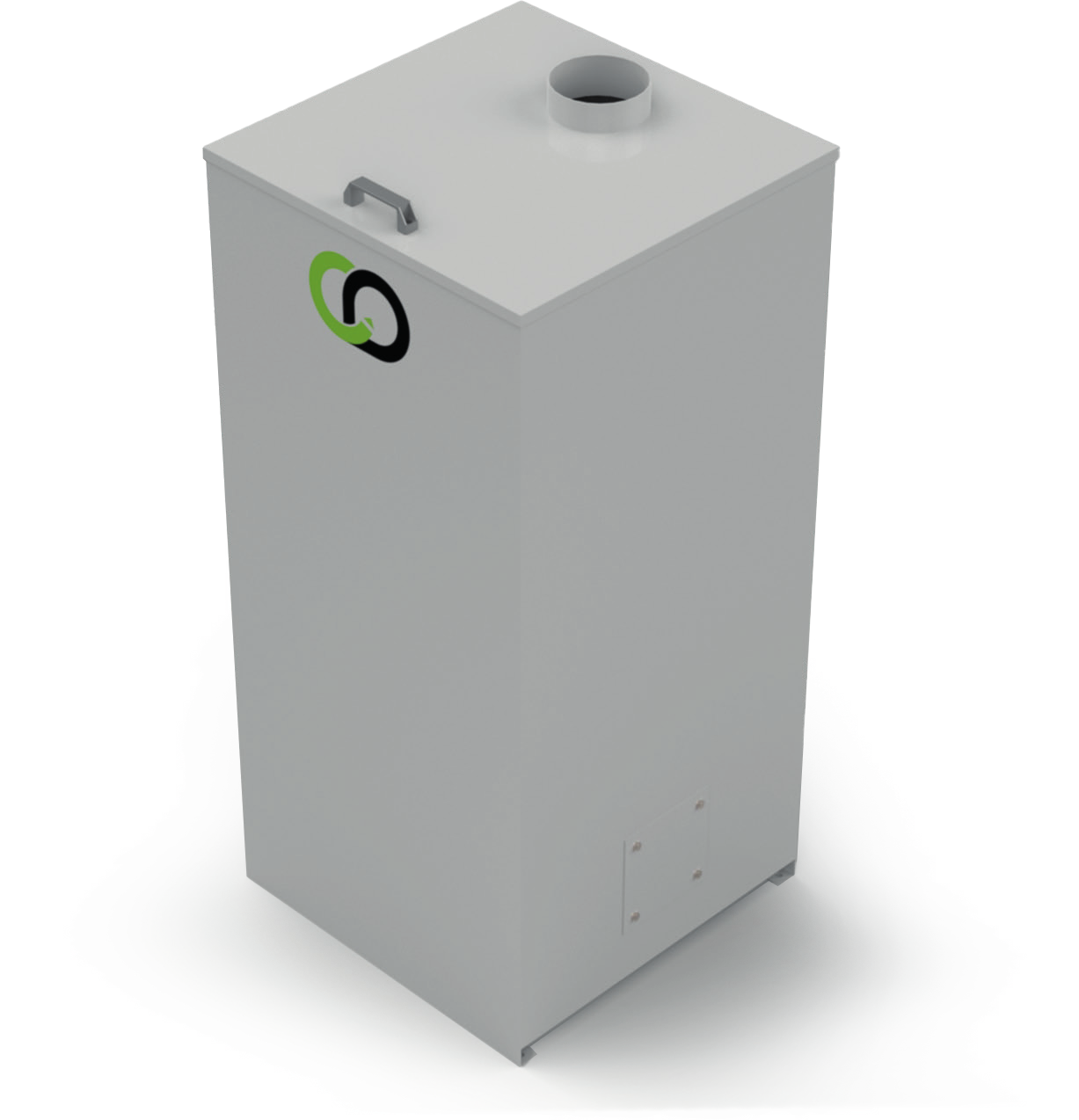 Bag-type DA
 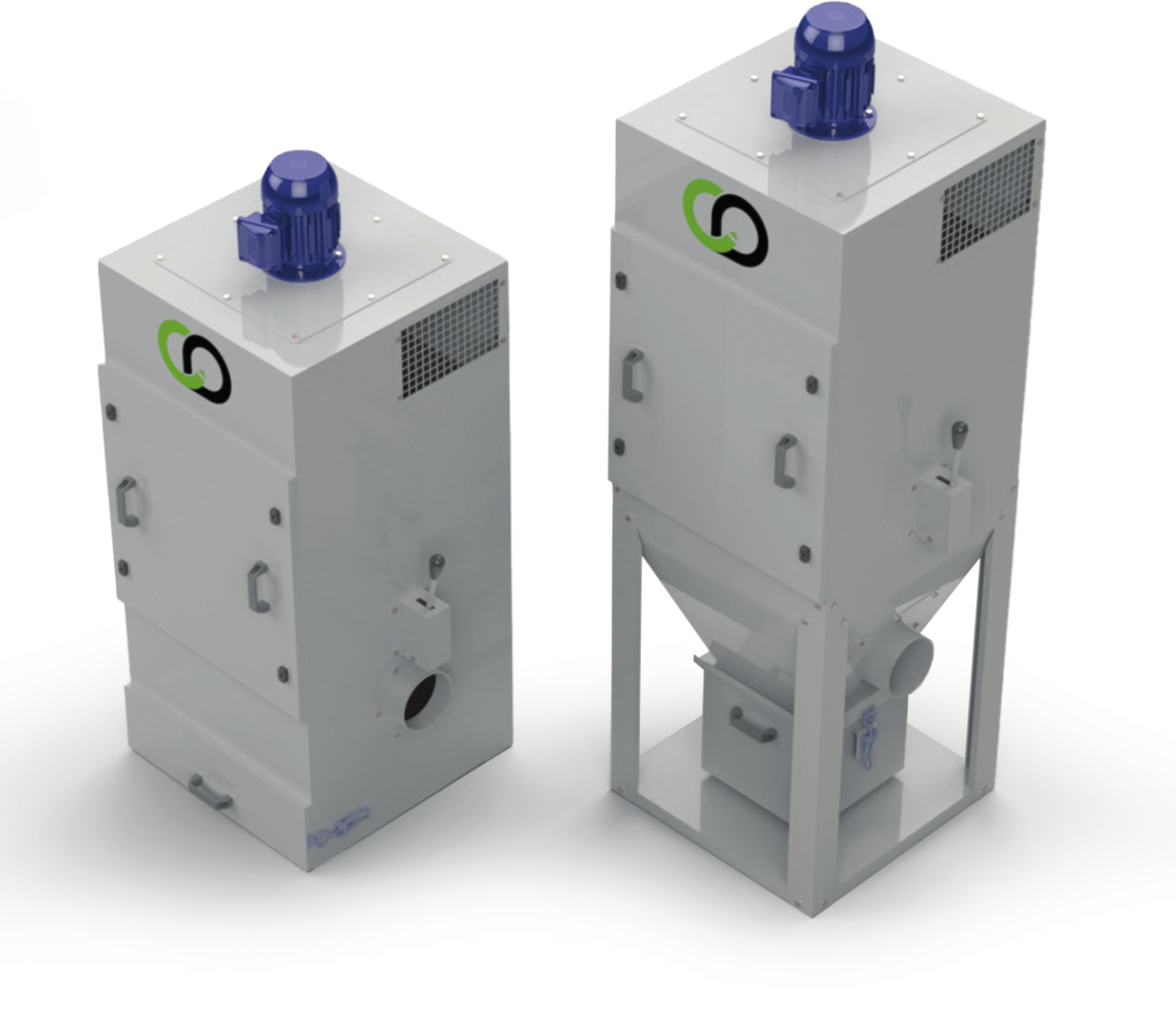 DA
DA 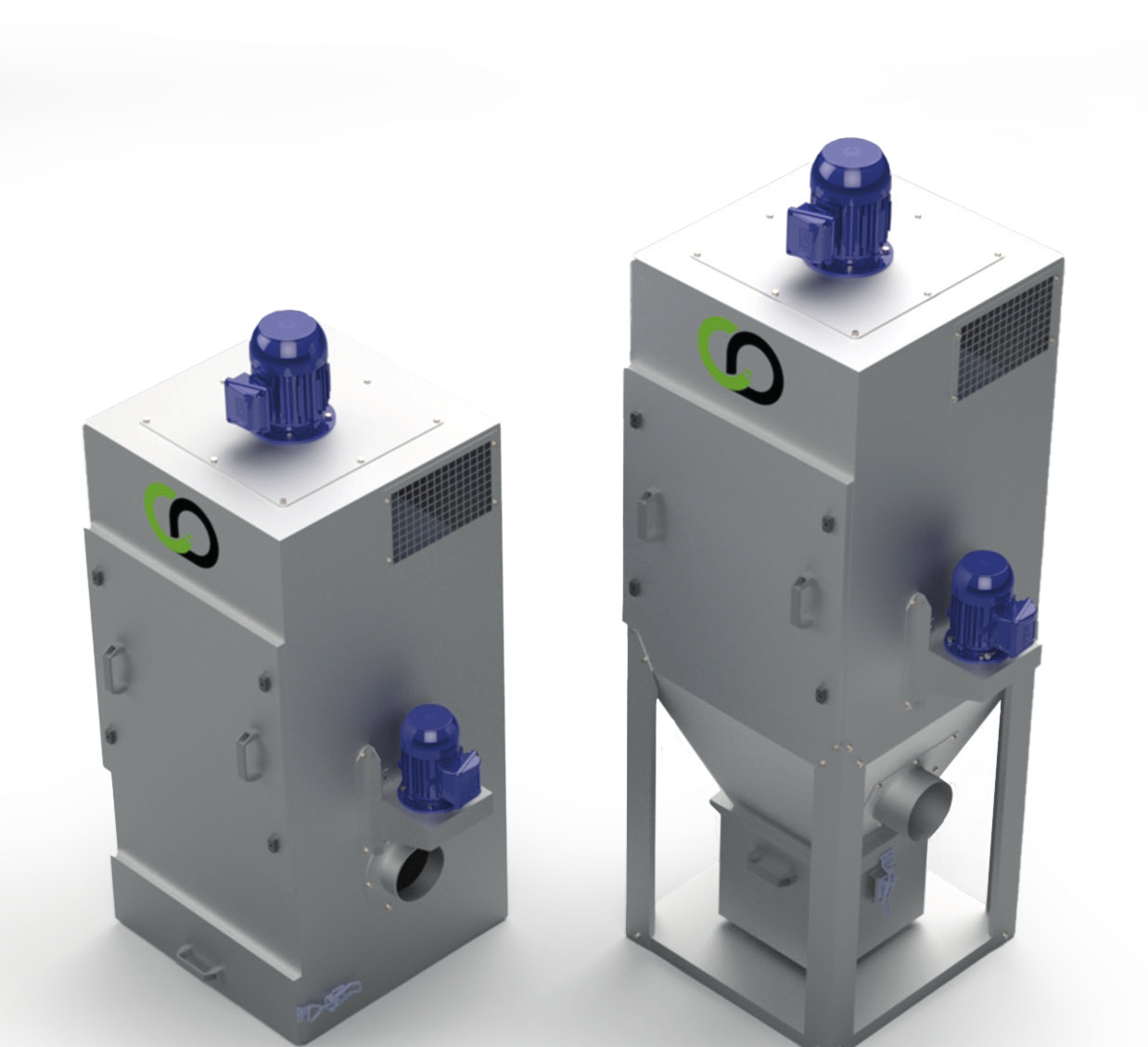 DAS
DAS  DAS CC
 Your industrial project
Select the right equipment.
Tell us about the pollutant, the required airflow and your production schedule. Our team will help you select the model and its options.