
03 / WELDING FUMES

Welding fumes.
Captured at the torch.

Articulated arms, downdraft tables, robotic cell hoods and filter extractors: we capture fumes at the workstation, from manual welders to robots, then filter them with mobile extractors or a centralised network with fan and activated carbon.

03welding fumes
1 000–3 000m³/h per mobile extractor
MIG · MAG · TIGand plasma cutting
Capture at the workstation

At the torch, before it reaches the welder's face

Suitable filtration

Static filter or activated carbon

From manual to robotic

Single workstation, workshop or robotic cell

Welders' health

Fumes subject to stricter requirements

WHAT'S AT STAKE

Fumes not to be breathed.

Ultrafine metal particles and gases: welding fumes rise straight towards the welder's face. Only capture placed as close as possible to the arc stops them before they are inhaled.

Have my workshop assessed
  • HealthCarcinogenic fumes

    Since 2017, IARC has classified welding fumes as carcinogenic to humans (Group 1).

  • RegulationsCapture at the source

    Occupational health rules require pollutants to be captured as close as possible to their point of emission, before they reach the operator.

  • WorkshopClear air, clear view

    Less fume in suspension: better visibility, neighbouring workstations protected, cleaner premises.

CAPTURE AT THE WORKSTATION

As close as possible to the arc.

The capture device follows the welder's movements and the size of the parts: arms for manual workstations, tables for small parts, built-in hoods for robots.

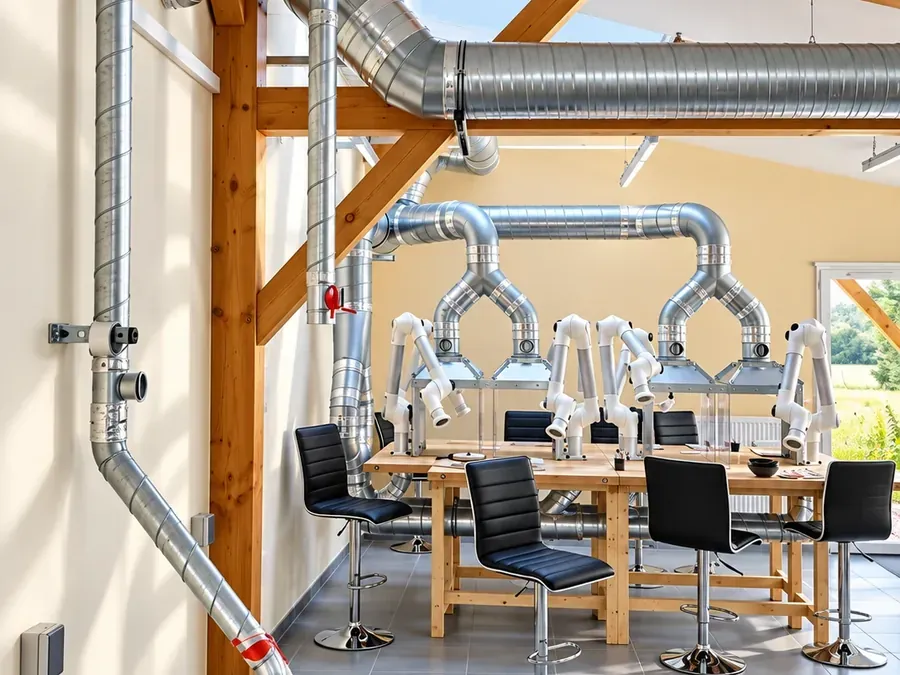
  • Articulated arms — welding fume capture
    Manual workstation

    Articulated arms

    Swivelling, self-supporting arms brought above the weld, then repositioned for each part.

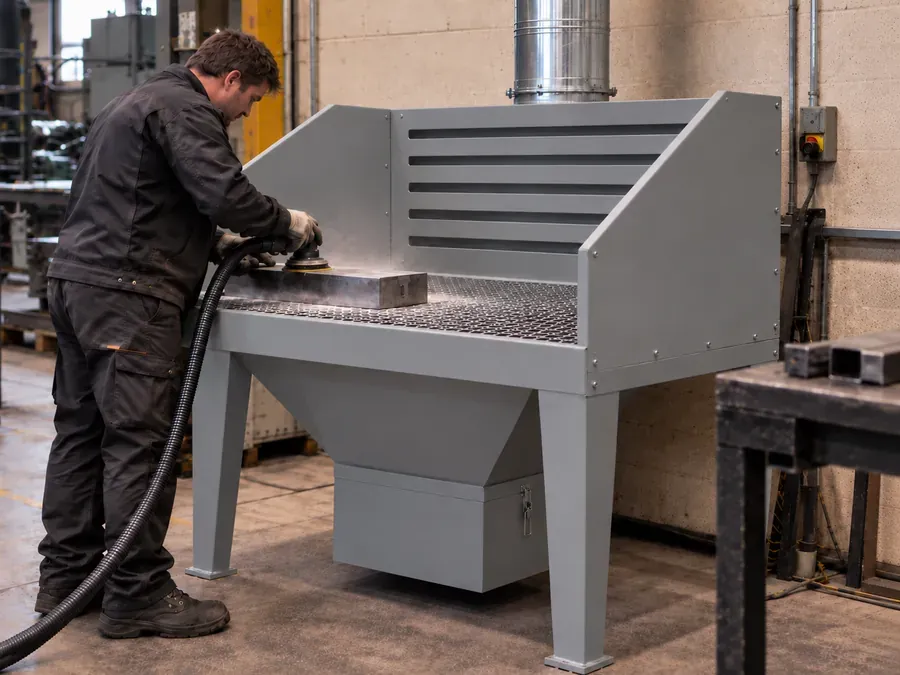
  • Downdraft tables — welding fume capture
    Workstation and worktop

    Downdraft tables

    The table doubles as a workstation: fumes are extracted through the worktop and the backboard. ST 120, ST 150 and SV ranges.

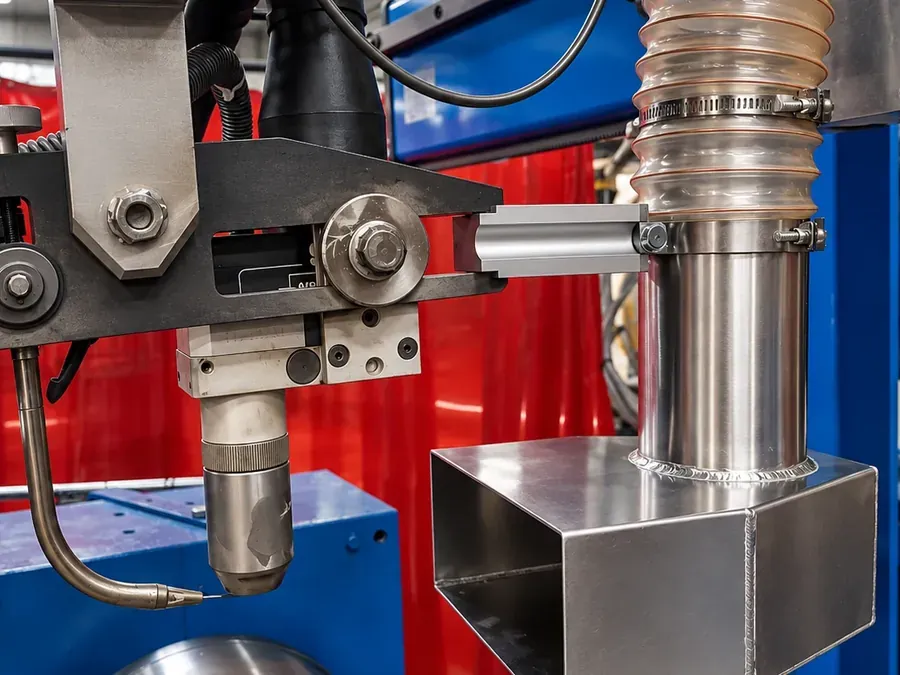
  • Robotic cells — welding fume capture
    Automated welding

    Robotic cells

    Capture devices built into the cell or the torch, designed around the robot and its path.

FILTER

Mobile extractor or centralised network.

The choice depends on the number of workstations, arc time and the volume of air to treat.

01

Static filtration

Articulated-arm extractors: air is drawn in through the swivelling hood, passes through a flow divider, a synthetic pre-filter and a high-efficiency filter, then is discharged at the base of the unit.

  • EX 1000 · EX 2000 · EX 3000
  • FM 1000 · FM 2000
  • CUBIC 1500
  • 1,000 to 3,000 m³/h
02

Fan and activated carbon

For workshops with several workstations: a fan extracts fumes from the whole network and sends them to a filter unit with an activated carbon stage, which also retains gases and odours before discharge.

  • Low and medium pressure fans
  • Activated carbon stage: gases and odours
  • Centralised network, several workstations

OUR METHOD

From the workstation to discharge.

Every welding workshop is different: we start from the process and the workstations, not from a catalogue.

  1. 01Identify the process

    MIG, MAG, TIG, plasma or thermal cutting, metals welded and arc time.

  2. 02Count the workstations

    Single workstation, line of workstations or robotic cell, and whether they run simultaneously.

  3. 03Choose the capture method

    Arm, table or cell hood, as close as possible to the arc without hindering the welder.

  4. 04Filter and discharge

    Single extractor or central unit, static filtration or activated carbon, air discharged or recirculated.

PROCESSES COVERED

  • MIG and MAG welding
  • TIG welding
  • Arc welding
  • Robotic cells
  • Plasma cutting
  • Thermal cutting

CAPTAIR & DIMAVENT / ENGINEERING OFFICE

How many welding workstations?
Let's talk about your workshop.

Processes used, number of workstations, part sizes and whether robots are used: a few details are enough to propose the right capture and filtration.